Child and Adolescent Behavioral Health (C&A) held multiple training sessions during President’s Day for clinical staff. One of the presentations covered the topic of Mental Health Stigma.
Dan Sager, a C&A doctoral intern who gave the presentation, used a definition provided by the Western Australia Department of Health.
“Stigma is a mark of disgrace that sets a person apart from others. When a person is labelled by their illness they are no longer seen as an individual but as part of a stereotyped group. Negative attitudes and beliefs towards this group create prejudice which leads to negative actions and discrimination.”
The Mayo Clinic defined mental health stigma as when someone views you in a negative way because you have distinguishing characteristic or personal trait that’s thought to be, or actually is, a disadvantage.”
Stigma promotes misunderstanding, discrimination, shame and fear. The stigma surrounding mental illness affects all of us at the individual, social and systemic levels. This stigma makes it difficult for people to get care for themselves or loves ones as people with mental illness are often viewed as dangerous, difficult, unintelligent and/or incapable of making decisions despite the evidence to the contrary. In fact, people with mental illness are more likely to be the victims of violence rather than the perpetrators. With approximately 20% of Americans struggling with some form of mental illness we know that people with mental health concerns come from all walks of life and fill every imaginable role in society.
The origins of Mental Illness
The way in which mental illness is viewed can be divided into the three categories supernatural/spiritual, somatogenic and psychogenic. These three viewpoints have each ebbed and flowed through societies since the beginning of human history often intertwining with each other. (One of the earliest suspected treatments for mental health was trepanation in which a hole was drilled into the head of individual to let out evil spirits and or relieve swelling in the brain.) These three ways of understanding mental health continue with in the United States to this day.
Supernatural/spiritual looks at mental health issues as having a supernatural or divine source. Throughout history it was believed that divine beings and demons would inflict people with mental illness either to punish them or test them. Others believed mental health issues were caused by magic from witches, fairies and other supernatural creatures. Versions of these beliefs continue on through present day with some churches using exorcisms and other religious rites to treat mental illness. There are other groups as well that believe that mental health concerns can be treated through various mystical or supernatural means. Stigma arises from this way of thinking due to the presumption that a person has a mental health disorder due to a moral failing on their part or the part of their family and treats the person accordingly.
Somatogenic looks to causes in the body as the source of mental illness. According to this perspective, mental illness is caused by disease, physical problems such as hormonal imbalances or other internal sources. It also looks to environmental causes such as pollution, diet and external factors that impact a person’s body. As scientists and health care professionals better understand genes epigenetics is taking a larger role in this field of thought and our understanding of what causes mental illness. The belief that somatogenic issues have been a cause of health problems dates back to ancient Egypt and Greece. This is currently one of the ways in which the medical community works to understand mental illness present day and many people work to improve their health or limit their exposure to environmental toxins and contaminants in order to improve their overall mental wellbeing or as a way to protect their mental health. Stigma from a somatogenic viewpoint may take different forms. Some people will become frustrated when a person does not get better quickly while on medication assuming some sort of failure. Others will see the person as diseased in some way and try to avoid them. And some will see the person as having brought the problem on them self through diet and lifestyle choices and believe that the person does not deserve help or understanding.
Psychogenic factors explore the ways in which traumatic events, maladaptive thoughts and coping styles, distorted perceptions and social factors create or exacerbate mental health concerns. The belief that negative or traumatic events, on personal or social levels, can cause mental health concerns is also quite old. The ancient Greeks were one of the first to recognize that sometimes people need a quiet and relaxing place to go in order to heal from mental trauma. The belief continues today with more focus on how trauma and coping styles can negatively impact mental health. There is also a much greater focus on the ways in which racism, sexism, homophobia, ableism and other forms of societal discrimination lead to mental health problems. Stigma from psychogenic beliefs may focus on a person just needs to “get over it” or “it’s all in their head.” Others may believe that, due to systemic issues, a person is incapable of having their health improve without first societal changes occurring first.
Today, most people’s understanding of mental illness reflects a combination of these viewpoints. For example, there has been some evidence to support a physiological component in many mental health conditions including depression, anxiety, ADHD and schizophrenia. That’s why medication can be an effective component of treatment. Also, societal and economic factors often do impact mental health, and yet people can benefit from treatment and support to help them function more adaptively within a problematic system. Additionally, problems can arise when people attribute their own experience or that of someone close to them to a single cause (such as a biochemical imbalance) when the cause more likely a combination of factors (such as environmental stressors + negative thinking + societal stressors + biochemical imbalance).
What is the impact of having a mental illness?
The impact of having a mental illness is often:
- Self-blame
- Shame/blaming others.
- Success/failure
- Denied access to resources.
- Intersectionality - the combined impact of belonging to more than one social category, such as race, class and gender.
What are some of the effects of mental health stigma?
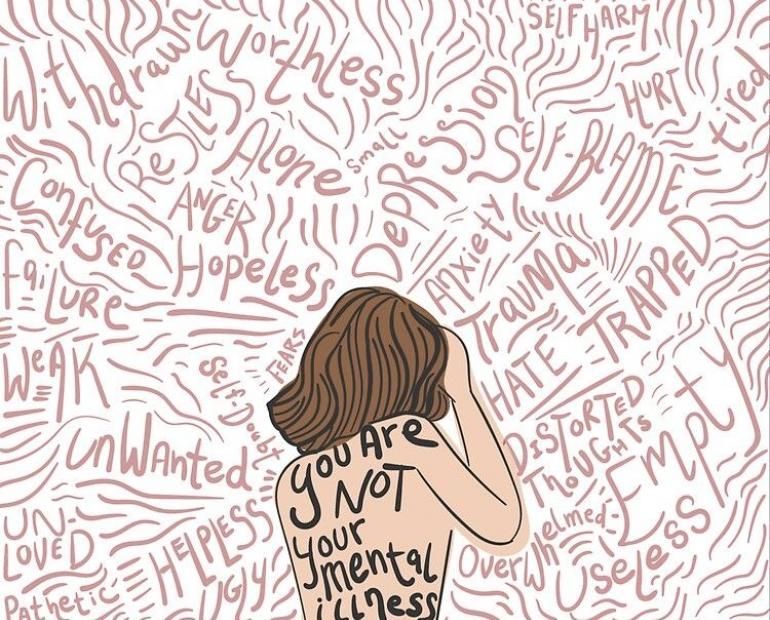
If individuals perceive a stigma associated with their mental health, a person may be less likely to seek out treatment and more likely internalize a sense of shame around their symptoms. This internalized sense of shame can be so great that even when people have other achievements, they do not feel accomplished due to this shame.
Family and friends may also stigmatize in what Dr. Erving Goffman, an expert on stigma, refers to as “the contamination effect.” Due to mental health stigma, people with mental illness may be perceived as dangerous, which in most cases is untrue. People with mental illness are more likely to be victims then aggressors. They are also at a higher risk of incarceration or isolation from society and resources such as jobs, community and housing.
Many people have a bias against individuals with mental health challenges. This bias fades into every day conversations something when we think something is bad, unacceptable or wrong so we say it is “crazy”. For examples, in politics, it has become more common to call people who disagree with you mentally ill thus conflating bad, unacceptable and wrong with mental illness even if that is not literally the intent. Often these kinds of comments come, from social interactions but also from medical professionals, politicians and members of the media. Even well-intentioned people sometimes perpetuate stigma. For example, when news outlets run stories about mental health, they may inadvertently increase stigma by showing people with mental illness at the extremes.
Progress is being made to reduce stigma. In 1999, the Surgeon General declared stigma towards mental health as a major health concern. The Affordable Care Act allowed people who had been denied medical insurance before the ability to purchase health insurance and required medical systems to treat mental health issues on parity with physical illness. This has had some success though parity has not yet been reached.
Part of removing the stigma surrounding mental health is how each individual perceives mental health. Here a few questions to ask yourself –
- Do I help perpetuate the stigma around mental illness?
- Do I counter bias?
- Where do I see bias?
- What are the subtle or overt ways that stigma is expressed?
There are multiple groups working to remove the stigma associated with mental illness. These groups include National Alliance on Mental Illness (NAMI), Stamp Out Stigma and the World Health Organization to name a few.
- C&A Doctoral Intern Dan Sager presented the information for this blog post at an agency training on Feb. 20. Sager’s doctoral internship with C&A will end on June 30, 2023. C&A’s trauma specialist Mary Kreitz, who has 20 years of experience, contributed to this post
For more information on the agency's services, please visit www.childandadolecent.org or call 330.433.6075.
RECENT POSTS