THE EQUAL WORTH OF EVERY HUMAN LIFE: A MORAL REFLECTION

Dr. Robert Willoughby • February 6, 2026

Every human life has equal worth. 

This worth is not earned. It is not granted. It is not dependent on achievement, wealth, identity, or status. The value of human life is intrinsic—built into our very existence.


Yet we live in a moment where the perception of human worth feels increasingly distorted. The problem is not that human value has changed. It is that our recognition of that value has become clouded.

The Problem: Distorted Perceptions of Worth

Although humanity inherently has equal worth, society often behaves as if worth is conditional. People are judged by their bank accounts, job titles, zip codes, skin color, gender identity, immigration status, or the sound of their names. These judgments are not reflections of human value—they are reflections of bias, prejudice, fear, stereotypes, economic systems, political narratives, and historical trauma.


These forces shape how people are treated, not who they are.
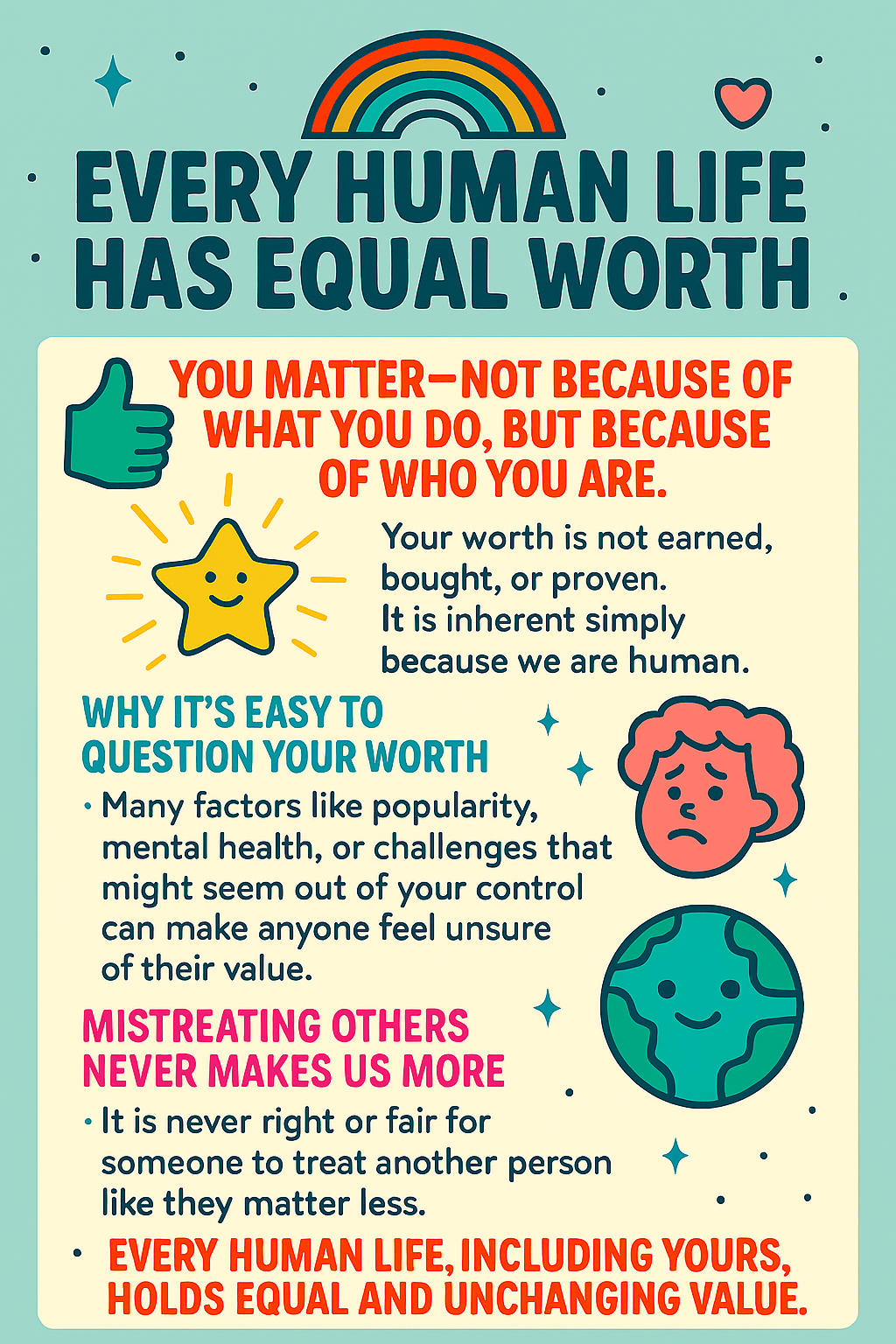
Humanity: The Moral Contradiction

Humanity means recognizing each person as equal in dignity. But we are pulled into a painful contradiction when society does not treat us equally (reflecting internalization of society’s biases, fear, stereotypes, etc.)

A difficult question emerges:

Can someone treat another person as unequal and still expect to be treated as equal? Philosophically, the answer is no. 


To treat someone as inferior is to claim superiority—to assume the authority to decide whose life has value and whose does not. This is the root of oppression. It is also the beginning of moral collapse.

Dignity: Kant’s Unshakeable Principle

Immanuel Kant argued that every person possesses dignity, not price (Kant, 1785/2012). A price can be compared or traded. Dignity cannot.


Kant insisted that no person may be used merely as a means to an end. Human value comes from our rational agency and moral capacity—not from external conditions. When people are objectified, exploited, or treated as disposable, it is not their worth that changes. It is the moral failure of those who refuse to see it.

The Social Contract: When Societies Fail

Philosophers like Hobbes, Locke, Rousseau, and Rawls argued that societies depend on agreements—explicit and implicit—about how we treat one another. Rawls (1971) introduced the Veil of Ignorance, asking us to imagine designing a society without knowing our race, wealth, gender, nationality, or abilities.


Behind that veil, no one would choose a world where some lives matter more than others.

When societies fail to honor human worth, they break the social contract that makes justice possible.

We Are Not Objects: Existentialist Insight

Existentialist thinkers like Sartre and Beauvoir emphasized that humans are subjects, not objects (Sartre, 1943/2003; Beauvoir, 1949/2011). 


To treat someone as a thing is to strip them of agency and reduce them to an instrument. This is not just harmful—it is ontologically violent, an attack on the very structure of what it means to be human.

Power and Worth: How Hierarchies Distort Humanity

Critical theorists such as Fanon, Arendt, and Foucault showed how power structures create artificial hierarchies of human worth (Fanon, 1963; Arendt, 1958; Foucault, 1977). Power determines:

  • whose pain is believed 
  • whose death is mourned 
  • whose voice is amplified 
  • whose body is protected 
  • whose humanity is recognized 


Wealth, race, gender identity, nationality, or immigration status do not change the value of a life.  But power structures distort how that value is treated.

Virtue: Humanity as a Practice

Virtue ethicists—from Aristotle to contemporary thinkers—remind us that morality is not just rules but character. Compassion, justice, courage, empathy, and humility are practices that allow us to see the humanity in others (Aristotle, trans. 2009).


When we fail to practice virtue, we fail morally—not because the other person lost value, but because we lost vision.

The Truth We Must Reclaim

  • The value of human life is inherent, equal, and unchanging. 
  • What changes is whether people and systems recognize that value. 
  • And when they fail to recognize it, the failure is theirs—not yours.
  • Humanity is not a ranking. It is a shared truth. 
  • And reclaiming that truth is one of the most urgent moral tasks of our time.

References

  • Arendt, H. (1958). *The human condition*. University of Chicago Press.
  • Aristotle. (2009). *Nicomachean ethics* (W. D. Ross, Trans.). Oxford University Press. (Original work published ca. 350 BCE)
  • Beauvoir, S. de. (2011). *The second sex* (C. Borde & S. Malovany-Chevallier, Trans.). Vintage Books. (Original work published 1949)
  • Fanon, F. (1963). *The wretched of the earth* (C. Farrington, Trans.). Grove Press.
  • Foucault, M. (1977). *Discipline and punish: The birth of the prison* (A. Sheridan, Trans.). Pantheon Books.
  • Kant, I. (2012). *Groundwork of the metaphysics of morals* (M. Gregor & J. Timmermann, Eds. & Trans.). Cambridge University Press. (Original work published 1785)
  • Rawls, J. (1971). *A theory of justice*. Harvard University Press.
  • Sartre, J.-P. (2003). *Being and nothingness* (H. E. Barnes, Trans.). Routledge. (Original work published 1943)

RECENT POSTS

Child and Adolescent Behavioral Health
By Daniel Mucci January 16, 2026
CANTON, Ohio (Jan 16) – Child and Adolescent Behavioral Health (C&A) announced today a strategic affiliation with Goodwill Industries of Greater Cleveland and East Central Ohio, Inc. (Goodwill). The affiliation reflects a shared commitment to strengthening community-based services and ensuring long-term stability for children, adolescents, and families across Stark County. This affiliation brings together two mission-driven nonprofit organizations that serve many of the same individuals and families. C&A’s clinical expertise in youth behavioral health will be supported by Goodwill’s established administrative and operational infrastructure, allowing both organizations to advance their missions while remaining focused on the communities they serve. “Youth mental health needs continue to grow across our community,” said Melissa Coultas, Chief Executive Officer of Child and Adolescent Behavioral Health. “This affiliation allows us to strengthen our operational foundation while preserving who we are. Our mission, our services, and our commitment to Stark County remain unchanged, and this partnership allows us to reinvest resources into care and into our staff.” As part of the affiliation, C&A will maintain its designated 501c3 status and operate as an affiliate program of Goodwill. C&A’s name, mission, programs and local leadership remain in place. Clinical services will continue without disruption. Select administrative functions will transition to a shared services model supported by Goodwill. “At Goodwill, our mission is to strengthen communities by helping people overcome barriers,” said Anne Richards, president and CEO of Goodwill Industries of Greater Cleveland and East Central Ohio. “This affiliation reflects Goodwill’s commitment to supporting vital local programs and ensuring C&A can continue delivering trusted, lifechanging mental health services to Stark County families for years to come.” C&A will retain its own Board of Directors and leadership team. Goodwill will serve as the corporate member and provide shared administrative services in areas such as human resources, information technology, and financial operations. “This was a thoughtful, mission-centered decision by the Board,” said Casey McCloud, Board President of Child and Adolescent Behavioral Health. “It strengthens C&A’s longterm sustainability while preserving local oversight and ensuring continued access to critical services for children and families.”
Father talking to his son on a couch; son looks pensive.
By Mary M. Kreitz September 12, 2025
It seems to be happening all the time – school shootings, violent attacks at public events, celebrities and public figures being attacked or even killed. When things like this happen, it usually shows up on the television and the internet, people post about it on social media, and people talk about it with others around them. Children and adolescents find out, and they may come to you wanting to talk or to ask you questions. How should you handle it? These are difficult but important conversations to have. Here are some tips for talking with children and teens about violent events.
Golden
By Melissa Coultas June 30, 2025
For 50 years, we have stood shoulder to shoulder with Stark County’s children and families, helping them grow, heal and thrive through every challenge. Child and Adolescent Behavioral Health (C&A) is a leading nonprofit here in Stark County, but many are unaware of the significant number of lives we touch every day. We are working to change that and find people in the community ready to help us build the next 50 years of hope for Stark County youth. We serve more than 4,000 kids each year by providing mental health services: a person to talk to, a mentor to help them grow, a place where kids with trauma can go to school and a place to hear a voice of reason where no one is turned away because of income.
Red and white megaphone with yellow sound effects, angled to the right.
By Daniel Mucci May 19, 2025
CANTON, Ohio (May 19) – Child and Adolescent Behavioral Health (C&A) has been awarded more than $217,000 in new grant funding from six community-focused foundations and agencies to enhance service delivery, support families, and improve internal operations across Stark County.  The grants—awarded by the Health Foundation of Greater Massillon, Massillon Rotary Foundation, North Canton Medical Foundation, United Way of Greater Stark County, the SummerTime Kids program, and the Roy H. Powell and Nina B. Powell Family Charitable Fund—reflect continued community investment in C&A’s mission and momentum. “These contributions help us strengthen the systems that support the mental health of our community’s youth,” said Melissa Coultas, CEO of Child and Adolescent Behavioral Health. “They ensure our team is equipped, our services remain accessible, and our families feel supported.”
By Mary M. Kreitz November 21, 2024
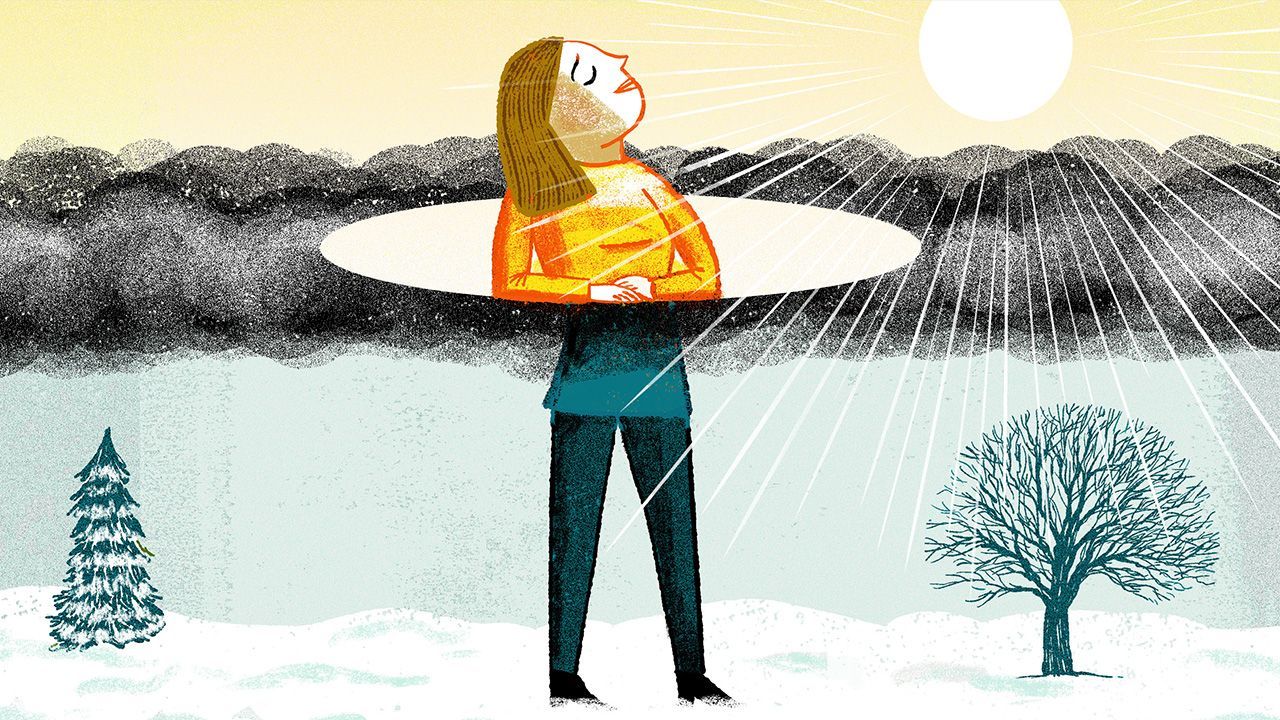
For many people changes in the seasons also bring changes in mood, energy, sleep, weight and appetite. Some researchers have found that as many as 90% of people report noticing these types of changes in themselves. However, for some people, the changes are so intense that they interfere with the person’s ability to function in their daily life.  Seasonal Affective Disorder or SAD is a type of clinical depression that occurs with a consistent seasonal pattern. The symptoms of SAD are the same as those for other depressive disorders; what is different is that the symptoms begin every year around the same time, last for several months, and then go away for the rest of the year. The most common form of SAD is what is known as winter-pattern SAD in which depressive symptoms start in the fall or early winter and end in the spring. Another less common form is known as summer-pattern SAD and is associated with depressive symptoms that occur during the spring and summer months and improve in the fall.
By Mary M. Kreitz November 6, 2024
The 2024 election has brought a lot of fear and stress into the lives of people throughout the country. A recent survey by the American Psychological Association found that 77% of adults in the US are worried about the future of the nation, 73% reported feeling stressed out about the economy and 69% reported feeling stressed about the presidential election. When adults are feeling this high of a level of stress, you can bet that children and adolescents are feeling it too.
By Daniel Mucci October 1, 2024
Are you a trusted adult to your child or someone’s child in your life? What are the characteristics of a trusted adult?  Trusted adults are viewed by children or adolescents as a safe figure that listens without judgment, agenda or expectation, but with the sole purpose of supporting and encouraging positivity within a young person’s life. Today’s youth identify a trusted adult as someone who is willing to listen and engage, rather than lecture and give orders. Young adults are interested in having open conversations about mental health, social media, bullying and sharing their own experiences.
By Daniel Mucci September 9, 2024
Child and Adolescent Behavioral Health’s (C&A) The Canton Repository Let Your Light Shine presented by the Massillon Eagles FOE #190 is Sept. 21 at the DoubleTree by Hilton, Canton, from 6-9 p.m. The 19th annual event supports the youth mental health programs and services C&A provides each year to our 4,100 clients.
By Mary M. Kreitz June 18, 2024
You have probably heard the scary statistics. LGBTQ+ youth are at higher risk for serious mental health problems (such as anxiety and depression) than their non-LGBTQ+ peers. They’re more likely to consider suicide, more likely to attempt suicide and more likely to engage in non-suicidal self-harm.
More Posts