
SEXTORTION EXPLOITS KIDS TO SEND EXPLICIT PHOTOS/VIDEOS

Dr. Seandra Walker • August 31, 2022

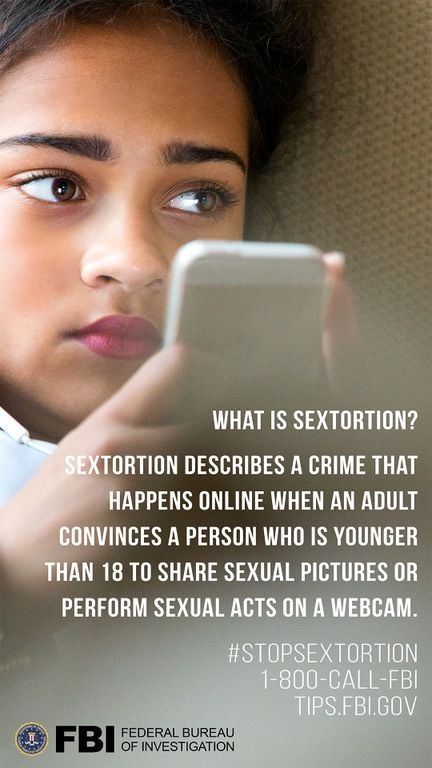
What is sextortion?

Greek philosopher Heraclitus has been famously quoted as saying, “Change is the only constant in life.” More than 2,500 years later, this could not be truer regarding technology and the internet. Technology is always changing, as are the social dynamics of an online world.

Twenty years ago, parents warned their children of “creeps in AOL chatrooms.” Today, most parents are unaware of how predatory the internet truly is. “Stranger danger” has been hammered into children’s heads for decades:


  • Don’t talk to strangers.
  • Don’t accept candy or gifts from strangers.
  • Don’t get into a stranger’s car.


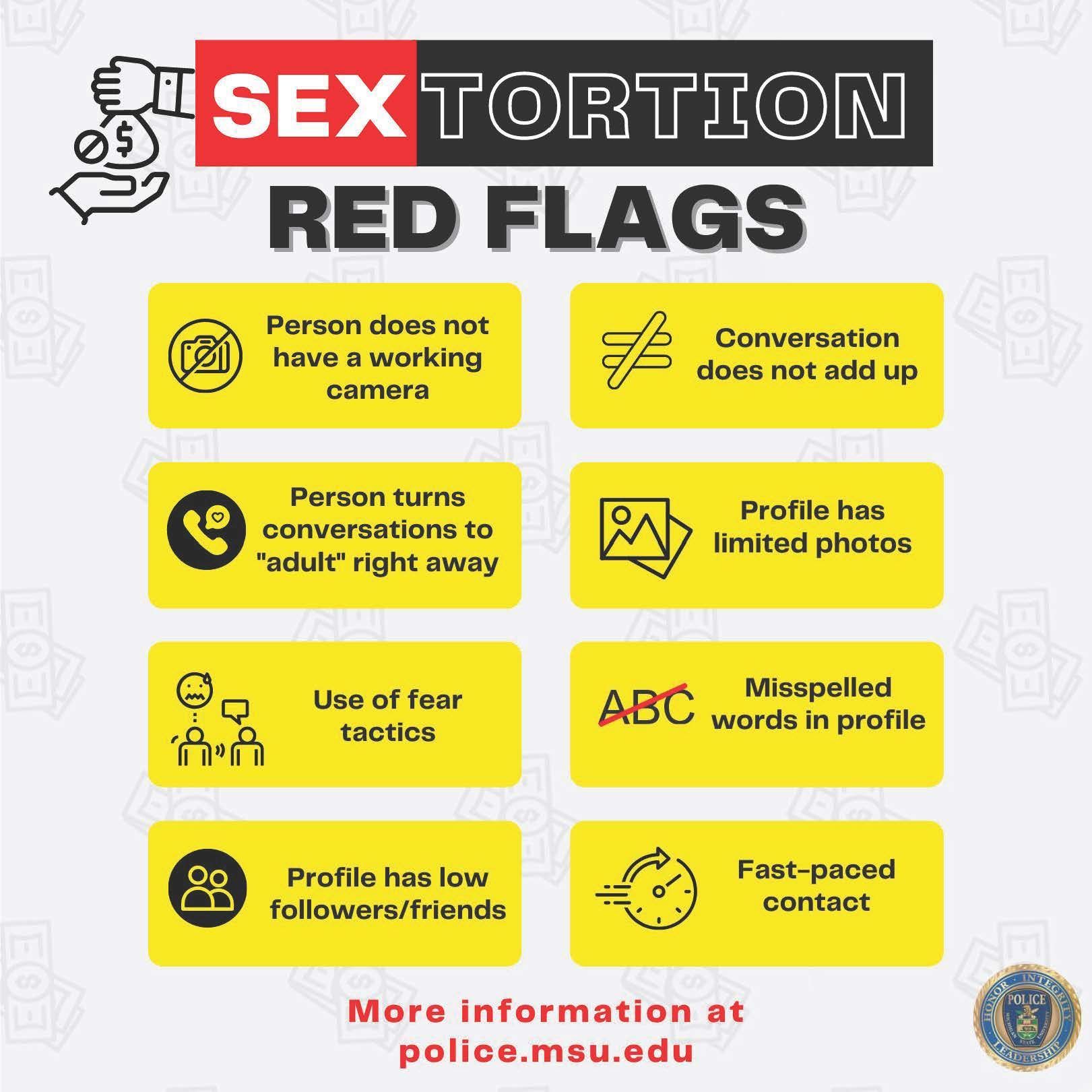
But what happens when the stranger presents themselves as a 15-year-old boy who loves soccer and attends a neighboring high school? Let’s say, their profile picture and online language appear consistent to that of an adolescent male. He even shares mutual friends with my teenage daughter. Everything checks out, right? Think again.

Social engineering is the art of communication where one person manipulates another person into providing confidential information, doing certain actions (for the benefit of the manipulator) or taking an action that the victim normally would not take. Sextortion is often a consequence of a particular type of social engineering called online grooming. Online grooming involves a malicious individual developing an emotional relationship or connection with a child for the purpose of sexual abuse.

Sextortion has been broadly defined as a type of sexual exploitation that involves threatening or coercing a child into sending sexually explicit photos or videos. After the perpetrator receives one or more sexually explicit photo or video from a child, they may threaten to release the photos or videos to the child’s family, friends or classmates unless they comply with the perpetrator’s demands. According to a study conducted by Sameer Hinduja and Justin Patchin (2019), the most common demands are more sexually explicit photos or videos (38%), sex or sexual acts (29%), and/or money (29%). The majority of sextortion cases begin with “consensual” sexting, where you willingly share explicit materials. It is important to note that sextortion is not solely perpetrated by adults targeting children they meet online. Sextortion can also occur in teen dating relationships or as part of a break-up. Sextortion is on the rise and has been increasing more rapidly than any other form of online child exploitation.
  • According to the National Center for Missing and Exploited Children (NCMEC) Sextortion Tipline from October 2013 through June 2015, approximately 22% of victims suspected or knew that multiple children were targeted by the same offender. The ages of sextortion juvenile victims range from 8- to 17-years-old, with 25% of sextortion victims being 13 years old or younger
  • (Thorn, 2017). A majority of sextortion victims were reported to be female children (78%) with the average age of 15 years. However, a recent study suggests that boys are more likely to be the target of sextortion but are more reluctant to tell an adult compared to girls (Hinduja & Patchin, 2019).
  • According to Patchin and Hinduja (2019), “75% of the victims of sextortion admitted to sending a sexually explicit image of themselves to someone else. That means that at least 25% of the victims did not, and their images were somehow procured illicitly (perhaps through hacking their phone, or the Cloud where their images were backed up).”
  • You may be asking yourself, “So what are kids doing when they are threatened!?” According to a 2017 survey of 2,097 participants, 62% of victims complied with demands made by the perpetrator in an effort to make the threats stop. However, 68% of those victims noted that the threats became more frequent after complying with the initial demands (Thorn, 2017).

Now, how are youth affected by sextortion?


  • Anxiety and depression including suicidal ideation and/or attempts
  • Withdraw from friends and family
  • Feelings of hopelessness and helplessness
  • Shame and embarrassment
  • Loss of control as well as feelings of safety/security
  • Bullying at school or online (if sexually explicit photos/videos are released)
  • Fear of legal consequences for victims (going to jail; sex offender registration) or consequences from parents (phone taken away; delete social media). This fear may contribute to delayed disclosure


In part two of blog series on sextortion, learn tips on how to avoid sextortion as well as resources for parents and children who have been victimized online.
Dr. Seandra Walker is a clinical psychologist and the Sexual Inappropriate Behavior Remediation (SIBR) Program Director at C&A. The mission of the SIBR program is to prevent sexually inappropriate behavior among adolescents and to address its effects on youth, families and the community. The purpose of treatment includes not only the elimination of risk for sexual and/or general recidivism, but also the introduction of positive indicators of health – psychological, social, biological, and/or spiritual. The goal of the SIBR program is to provide relevant psychoeducation, effective interventions, and genuine empathy to remediate inappropriate sexual behaviors and develop skills necessary for healthy and happy relationships.


If you are interested in these services and not already a client of C&A, you can call our intake department (330) 433-6075 to schedule an initial intake.

RECENT POSTS
Child and Adolescent Behavioral Health
By Daniel Mucci January 16, 2026
CANTON, Ohio (Jan 16) – Child and Adolescent Behavioral Health (C&A) announced today a strategic affiliation with Goodwill Industries of Greater Cleveland and East Central Ohio, Inc. (Goodwill). The affiliation reflects a shared commitment to strengthening community-based services and ensuring long-term stability for children, adolescents, and families across Stark County. This affiliation brings together two mission-driven nonprofit organizations that serve many of the same individuals and families. C&A’s clinical expertise in youth behavioral health will be supported by Goodwill’s established administrative and operational infrastructure, allowing both organizations to advance their missions while remaining focused on the communities they serve. “Youth mental health needs continue to grow across our community,” said Melissa Coultas, Chief Executive Officer of Child and Adolescent Behavioral Health. “This affiliation allows us to strengthen our operational foundation while preserving who we are. Our mission, our services, and our commitment to Stark County remain unchanged, and this partnership allows us to reinvest resources into care and into our staff.” As part of the affiliation, C&A will maintain its designated 501c3 status and operate as an affiliate program of Goodwill. C&A’s name, mission, programs and local leadership remain in place. Clinical services will continue without disruption. Select administrative functions will transition to a shared services model supported by Goodwill. “At Goodwill, our mission is to strengthen communities by helping people overcome barriers,” said Anne Richards, president and CEO of Goodwill Industries of Greater Cleveland and East Central Ohio. “This affiliation reflects Goodwill’s commitment to supporting vital local programs and ensuring C&A can continue delivering trusted, lifechanging mental health services to Stark County families for years to come.” C&A will retain its own Board of Directors and leadership team. Goodwill will serve as the corporate member and provide shared administrative services in areas such as human resources, information technology, and financial operations. “This was a thoughtful, mission-centered decision by the Board,” said Casey McCloud, Board President of Child and Adolescent Behavioral Health. “It strengthens C&A’s longterm sustainability while preserving local oversight and ensuring continued access to critical services for children and families.”
By Mary M. Kreitz September 12, 2025
It seems to be happening all the time – school shootings, violent attacks at public events, celebrities and public figures being attacked or even killed. When things like this happen, it usually shows up on the television and the internet, people post about it on social media, and people talk about it with others around them. Children and adolescents find out, and they may come to you wanting to talk or to ask you questions. How should you handle it? These are difficult but important conversations to have. Here are some tips for talking with children and teens about violent events.
By Melissa Coultas June 30, 2025
For 50 years, we have stood shoulder to shoulder with Stark County’s children and families, helping them grow, heal and thrive through every challenge. Child and Adolescent Behavioral Health (C&A) is a leading nonprofit here in Stark County, but many are unaware of the significant number of lives we touch every day. We are working to change that and find people in the community ready to help us build the next 50 years of hope for Stark County youth. We serve more than 4,000 kids each year by providing mental health services: a person to talk to, a mentor to help them grow, a place where kids with trauma can go to school and a place to hear a voice of reason where no one is turned away because of income.
Red and white megaphone with yellow sound effects, angled to the right.
By Daniel Mucci May 19, 2025
CANTON, Ohio (May 19) – Child and Adolescent Behavioral Health (C&A) has been awarded more than $217,000 in new grant funding from six community-focused foundations and agencies to enhance service delivery, support families, and improve internal operations across Stark County.  The grants—awarded by the Health Foundation of Greater Massillon, Massillon Rotary Foundation, North Canton Medical Foundation, United Way of Greater Stark County, the SummerTime Kids program, and the Roy H. Powell and Nina B. Powell Family Charitable Fund—reflect continued community investment in C&A’s mission and momentum. “These contributions help us strengthen the systems that support the mental health of our community’s youth,” said Melissa Coultas, CEO of Child and Adolescent Behavioral Health. “They ensure our team is equipped, our services remain accessible, and our families feel supported.”
By Mary M. Kreitz November 21, 2024
For many people changes in the seasons also bring changes in mood, energy, sleep, weight and appetite. Some researchers have found that as many as 90% of people report noticing these types of changes in themselves. However, for some people, the changes are so intense that they interfere with the person’s ability to function in their daily life.  Seasonal Affective Disorder or SAD is a type of clinical depression that occurs with a consistent seasonal pattern. The symptoms of SAD are the same as those for other depressive disorders; what is different is that the symptoms begin every year around the same time, last for several months, and then go away for the rest of the year. The most common form of SAD is what is known as winter-pattern SAD in which depressive symptoms start in the fall or early winter and end in the spring. Another less common form is known as summer-pattern SAD and is associated with depressive symptoms that occur during the spring and summer months and improve in the fall.
By Mary M. Kreitz November 6, 2024
The 2024 election has brought a lot of fear and stress into the lives of people throughout the country. A recent survey by the American Psychological Association found that 77% of adults in the US are worried about the future of the nation, 73% reported feeling stressed out about the economy and 69% reported feeling stressed about the presidential election. When adults are feeling this high of a level of stress, you can bet that children and adolescents are feeling it too.
By Daniel Mucci October 1, 2024
Are you a trusted adult to your child or someone’s child in your life? What are the characteristics of a trusted adult?  Trusted adults are viewed by children or adolescents as a safe figure that listens without judgment, agenda or expectation, but with the sole purpose of supporting and encouraging positivity within a young person’s life. Today’s youth identify a trusted adult as someone who is willing to listen and engage, rather than lecture and give orders. Young adults are interested in having open conversations about mental health, social media, bullying and sharing their own experiences.
By Daniel Mucci September 9, 2024
Child and Adolescent Behavioral Health’s (C&A) The Canton Repository Let Your Light Shine presented by the Massillon Eagles FOE #190 is Sept. 21 at the DoubleTree by Hilton, Canton, from 6-9 p.m. The 19th annual event supports the youth mental health programs and services C&A provides each year to our 4,100 clients.
By Mary M. Kreitz June 18, 2024
You have probably heard the scary statistics. LGBTQ+ youth are at higher risk for serious mental health problems (such as anxiety and depression) than their non-LGBTQ+ peers. They’re more likely to consider suicide, more likely to attempt suicide and more likely to engage in non-suicidal self-harm.
More Posts