DO YOU USE MICROAGGRESSIONS? ARE YOU AWARE OF THE HARM THIS MAY CAUSE?

Mary Kreitz • February 3, 2021

Microaggressions are everyday slights, indignities, put-downs, and insults that people of color, women, the LGBTQ+ population and other marginalized people deal with every day.  These interactions might be comments, questions or actions that send denigrating messages to people because they belong to a minority group.  Microaggressions are rooted in stereotypes and reflect deeply ingrained biases that people may not be aware of having.


One of the things that makes microaggressions disconcerting is how easily they fly under the radar.  Microaggressions happen casually, frequently and often without any intention of harm.  In fact, the person making the comment may not even realize they are committing a microaggression.

If microaggressions are so subtle and unintentional, how do we know if we are doing them?  Start by learning the forms that microaggressions can take so that you will be better able to recognize them when they happen.


Psychologist Derald Wing Sue of Columbia University has identified three types of microaggressions:

MICROINSULTS

Microinsults are messages that insult someone’s personal identity or their heritage. These can be subtle snubs, such as ignoring a black customer and serving the white customers first even though they arrived later. Another form of microinsult might actually sound like a compliment on the surface, but contain a hidden insult about a group of people. An example might be telling someone “You’re pretty for a heavy girl” or “You’re so articulate. You don’t even sound black on the phone.”

MICROASSAULTS

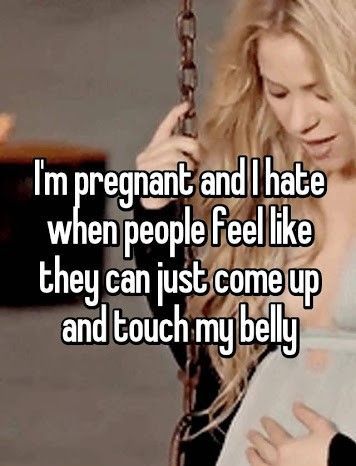
Microassaults are comments or actions that are intentionally discriminatory or intrusive. Touching a pregnant woman’s belly without permission is an example of a microassaultive behavior. Making fun of names that are unfamiliar to you or difficult for you to pronounce because they are not from your cultural background is an example of a verbal microassault.

MICROINVALIDATIONS

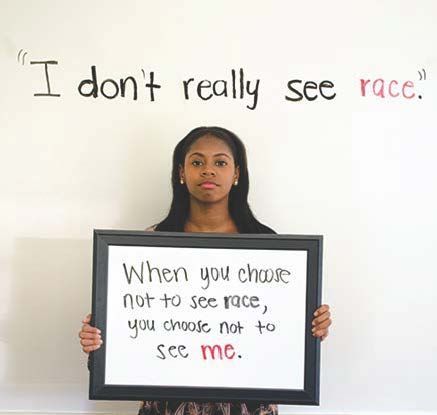
Microinvalidations are messages that invalidate or nullify the experience of another person.  This is what is happening if someone tells you that they were insulted or offended by something Brian said and you respond, “That can’t be true.  I know Brian. He’s a nice guy. I’m sure he didn’t mean it that way.”  Similarly, comments like “I don’t see color” or “all lives matter” send messages that the person’s struggle as a member of a marginalized group isn’t real or that it isn’t something you care about.


An important note about the prefix “micro” needs to be made.  Micro can be used to mean tiny but that’s not the meaning that applies here.  Microaggressions are not tiny aggressions.  Instead think of micro in the way that is used when talking about economics – we aren’t talking about things that are happening at a societal or institutional level (the “macro” level), they take place in interactions between individual persons (the “micro” level).
One of the biggest dangers of microaggression lies in its ability to be denied.  A person can easily say, “that’s not what I meant” or “I was just joking.”  Often the target of the microaggression gets criticized for “taking it too personally” or “being too sensitive.”  The anger a person feels as a result of microaggressions might be used as evidence confirming negative stereotypes, such as “the angry black woman.”  In recent years the label “snowflake” has become popular as a derogatory way to accuse someone of being overly sensitive, fragile and unable to deal with opposing opinions.  It is important to recognize that intent is irrelevant in determining whether or not language or behavior is offensive.  Just because you don’t intend harm when you say something doesn’t mean someone else isn’t harmed by hearing what you said.


Microaggressions do real harm.  In her TEDx Oakland talk on this topic, Tiffany Alvoid explained:


“Microaggressions wound people.  If we were to compare it to getting a paper cut, one paper cut is manageable but paper cuts all over your body is something quite different.  And it’s the accumulation of offensive comments in social settings and professional settings that begin to take a toll on a person’s spirit.”


Research shows that microaggressions lead to lower self-esteem and higher levels stress, anger and depression in members of marginalized groups, and to uncomfortable and less productive work and educational environments.

WHAT CAN WE DO TO AVOID MAKING MICROAGGRESSIONS?

What can we do to avoid making microaggressions?There are some very basic things people can do to avoid microaggressions.


  1. Before you speak or act, take a moment to think, especially if you are commenting on someone’s identity.
  2. What could be the possible impact of what you’re about to say or do?
  3. How might this person react?
  4. Is it necessary to say this?
  5. Listen when people explain why certain remarks or behaviors offend them.
  6. Don’t be afraid to admit it when you’ve made a mistake. A single statement or behavior is not a reflection of a whole person. It is possible to make a racist comment without being a  One factor that determines the difference is willingness to recognize that you’ve offended someone, apologize for the offense and learn from the experience so that the offense is not repeated.
  7. Make an ongoing commitment to learning.
  8. Seek out opportunities to learn about and interact with people who differ from you.
  9. Learn the meaning and history behind commonly used phrases and jokes that may be offensive.
  10. Strive to be aware of your own biases, the stereotypes that influence your thinking and the assumptions you make about others.


Anyone can be guilty of committing a microaggression. It doesn’t mean you are a bad person. It does mean you have some learning to do. Microaggressions are more than just insults, insensitive comments or general rude behavior. The damage they cause is real and has long-lasting effects. That’s why it is imperative that we all do our part to recognize what microaggressions are and make a conscious effort not to engage in them and not to allow them to go unchecked when we notice them happening.


Child and Adolescent Behavioral Health's Trauma Program Manager Mary Kreitz is the author of this blog post. If your child is struggling because of receiving microaggressions, please contact C&A at 330-433-6075.

RECENT POSTS
Child and Adolescent Behavioral Health
By Daniel Mucci January 16, 2026
CANTON, Ohio (Jan 16) – Child and Adolescent Behavioral Health (C&A) announced today a strategic affiliation with Goodwill Industries of Greater Cleveland and East Central Ohio, Inc. (Goodwill). The affiliation reflects a shared commitment to strengthening community-based services and ensuring long-term stability for children, adolescents, and families across Stark County. This affiliation brings together two mission-driven nonprofit organizations that serve many of the same individuals and families. C&A’s clinical expertise in youth behavioral health will be supported by Goodwill’s established administrative and operational infrastructure, allowing both organizations to advance their missions while remaining focused on the communities they serve. “Youth mental health needs continue to grow across our community,” said Melissa Coultas, Chief Executive Officer of Child and Adolescent Behavioral Health. “This affiliation allows us to strengthen our operational foundation while preserving who we are. Our mission, our services, and our commitment to Stark County remain unchanged, and this partnership allows us to reinvest resources into care and into our staff.” As part of the affiliation, C&A will maintain its designated 501c3 status and operate as an affiliate program of Goodwill. C&A’s name, mission, programs and local leadership remain in place. Clinical services will continue without disruption. Select administrative functions will transition to a shared services model supported by Goodwill. “At Goodwill, our mission is to strengthen communities by helping people overcome barriers,” said Anne Richards, president and CEO of Goodwill Industries of Greater Cleveland and East Central Ohio. “This affiliation reflects Goodwill’s commitment to supporting vital local programs and ensuring C&A can continue delivering trusted, lifechanging mental health services to Stark County families for years to come.” C&A will retain its own Board of Directors and leadership team. Goodwill will serve as the corporate member and provide shared administrative services in areas such as human resources, information technology, and financial operations. “This was a thoughtful, mission-centered decision by the Board,” said Casey McCloud, Board President of Child and Adolescent Behavioral Health. “It strengthens C&A’s longterm sustainability while preserving local oversight and ensuring continued access to critical services for children and families.”
By Mary M. Kreitz September 12, 2025
It seems to be happening all the time – school shootings, violent attacks at public events, celebrities and public figures being attacked or even killed. When things like this happen, it usually shows up on the television and the internet, people post about it on social media, and people talk about it with others around them. Children and adolescents find out, and they may come to you wanting to talk or to ask you questions. How should you handle it? These are difficult but important conversations to have. Here are some tips for talking with children and teens about violent events.
By Melissa Coultas June 30, 2025
For 50 years, we have stood shoulder to shoulder with Stark County’s children and families, helping them grow, heal and thrive through every challenge. Child and Adolescent Behavioral Health (C&A) is a leading nonprofit here in Stark County, but many are unaware of the significant number of lives we touch every day. We are working to change that and find people in the community ready to help us build the next 50 years of hope for Stark County youth. We serve more than 4,000 kids each year by providing mental health services: a person to talk to, a mentor to help them grow, a place where kids with trauma can go to school and a place to hear a voice of reason where no one is turned away because of income.
Red and white megaphone with yellow sound effects, angled to the right.
By Daniel Mucci May 19, 2025
CANTON, Ohio (May 19) – Child and Adolescent Behavioral Health (C&A) has been awarded more than $217,000 in new grant funding from six community-focused foundations and agencies to enhance service delivery, support families, and improve internal operations across Stark County.  The grants—awarded by the Health Foundation of Greater Massillon, Massillon Rotary Foundation, North Canton Medical Foundation, United Way of Greater Stark County, the SummerTime Kids program, and the Roy H. Powell and Nina B. Powell Family Charitable Fund—reflect continued community investment in C&A’s mission and momentum. “These contributions help us strengthen the systems that support the mental health of our community’s youth,” said Melissa Coultas, CEO of Child and Adolescent Behavioral Health. “They ensure our team is equipped, our services remain accessible, and our families feel supported.”
By Mary M. Kreitz November 21, 2024
For many people changes in the seasons also bring changes in mood, energy, sleep, weight and appetite. Some researchers have found that as many as 90% of people report noticing these types of changes in themselves. However, for some people, the changes are so intense that they interfere with the person’s ability to function in their daily life.  Seasonal Affective Disorder or SAD is a type of clinical depression that occurs with a consistent seasonal pattern. The symptoms of SAD are the same as those for other depressive disorders; what is different is that the symptoms begin every year around the same time, last for several months, and then go away for the rest of the year. The most common form of SAD is what is known as winter-pattern SAD in which depressive symptoms start in the fall or early winter and end in the spring. Another less common form is known as summer-pattern SAD and is associated with depressive symptoms that occur during the spring and summer months and improve in the fall.
By Mary M. Kreitz November 6, 2024
The 2024 election has brought a lot of fear and stress into the lives of people throughout the country. A recent survey by the American Psychological Association found that 77% of adults in the US are worried about the future of the nation, 73% reported feeling stressed out about the economy and 69% reported feeling stressed about the presidential election. When adults are feeling this high of a level of stress, you can bet that children and adolescents are feeling it too.
By Daniel Mucci October 1, 2024
Are you a trusted adult to your child or someone’s child in your life? What are the characteristics of a trusted adult?  Trusted adults are viewed by children or adolescents as a safe figure that listens without judgment, agenda or expectation, but with the sole purpose of supporting and encouraging positivity within a young person’s life. Today’s youth identify a trusted adult as someone who is willing to listen and engage, rather than lecture and give orders. Young adults are interested in having open conversations about mental health, social media, bullying and sharing their own experiences.
By Daniel Mucci September 9, 2024
Child and Adolescent Behavioral Health’s (C&A) The Canton Repository Let Your Light Shine presented by the Massillon Eagles FOE #190 is Sept. 21 at the DoubleTree by Hilton, Canton, from 6-9 p.m. The 19th annual event supports the youth mental health programs and services C&A provides each year to our 4,100 clients.
By Mary M. Kreitz June 18, 2024
You have probably heard the scary statistics. LGBTQ+ youth are at higher risk for serious mental health problems (such as anxiety and depression) than their non-LGBTQ+ peers. They’re more likely to consider suicide, more likely to attempt suicide and more likely to engage in non-suicidal self-harm.
More Posts